Regulation
IFSCA at Five: Building a Global Financial Hub in GIFT City
India's youngest financial regulator built a hub in five years. The hard part starts now.
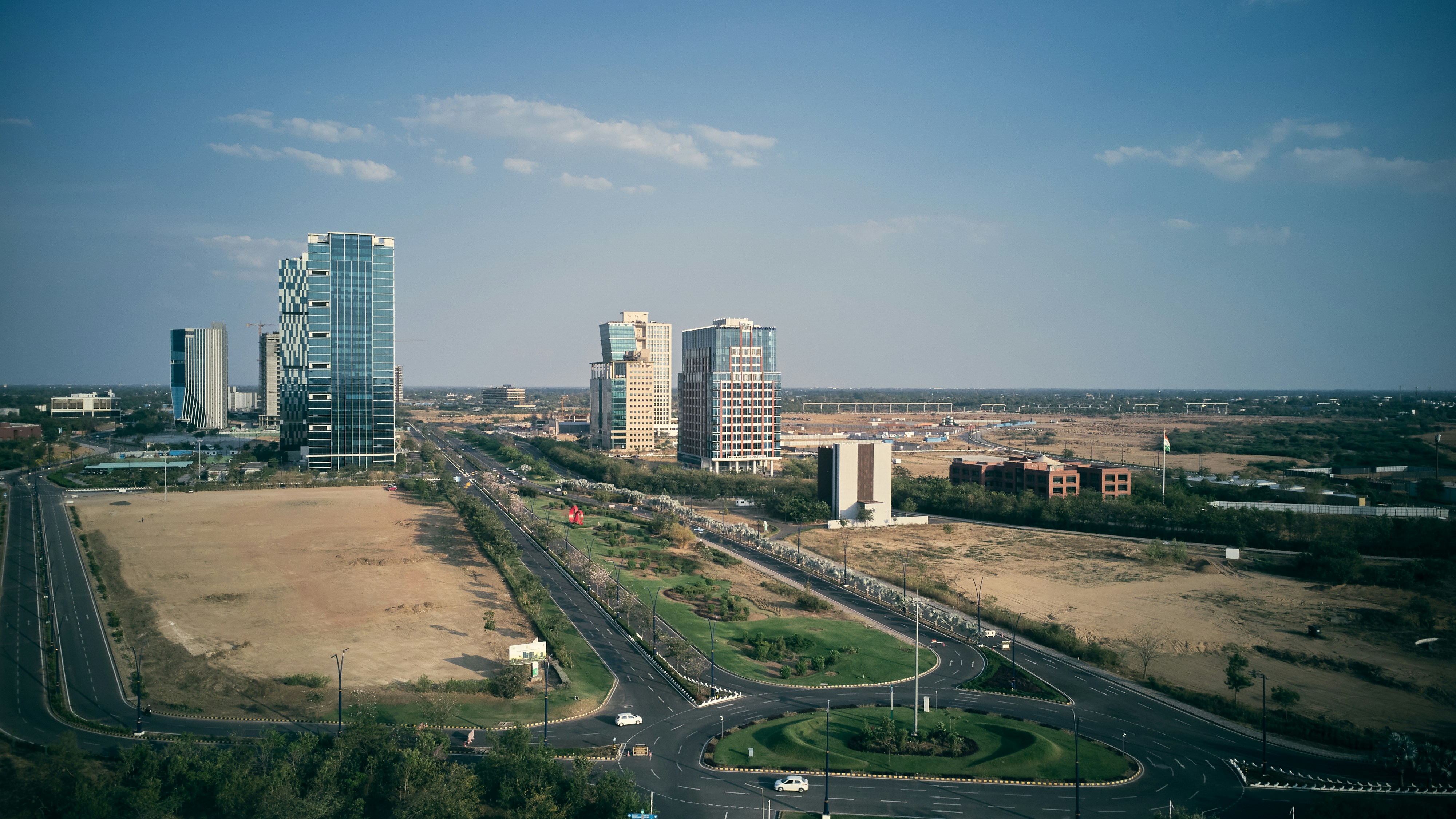
India's youngest financial regulator built a hub in five years. The hard part starts now.
India has a long habit of announcing financial hubs and then quietly forgetting about them. For most of its first decade, GIFT City — Gujarat International Finance Tec-City, on the edge of Gandhinagar — looked set to join that list. Two glass towers, an ambitious underground utility tunnel, and a great many presentations about becoming “India's Singapore.”
Then somebody fixed the plumbing.
On 27 April 2020, in the thick of the first national lockdown, the International Financial Services Centres Authority opened for business under the IFSCA Act, 2019. Until that morning, anyone wanting to do anything inside India's International Financial Services Centre had to satisfy four separate regulators — the RBI, SEBI, IRDAI and PFRDA — each with its own rulebook, its own timelines and its own view of what an offshore unit was permitted to do. IFSCA replaced the lot with a single authority.
IFSCA turned five in April 2025. A year further on, with the full FY2025-26 numbers now on the table, it is finally possible to say something sharper than “promising.”
The unified-regulator idea sounds like administrative housekeeping. It is not. Financial firms do not choose jurisdictions on tax rates alone; they choose on how quickly they get an answer, and how confident they are that the answer will still hold in three years. The March 2026 edition of the Global Financial Centres Index asked practitioners which aspects of regulation matter most to a centre's development. Predictability came first, followed by speed of regulatory response, then flexibility and quality. Cost finished dead last.
That is the exam IFSCA has been sitting since 2020, and it has been unusually productive about it. Following the enactment of the IFSCA Act, 35 regulations and five frameworks have been put in place, covering banking, insurance, capital markets, aircraft and ship leasing, bullion, sustainable finance and — improbably but usefully — foreign university campuses. In 2024 the Authority launched its Single Window IT System (SWIT), folding the IFSCA registration, the SEZ letter of approval, the GST number and the no-objection certificates from RBI, SEBI and IRDAI into a single online application.
2025 was the year of consolidation. The IFSCA (Fund Management) Regulations, 2025 and the IFSCA (Capital Market Intermediaries) Regulations, 2025 gathered a scatter of circulars and older rules into two coherent codes — one governing fund management entities and their schemes, the other covering broker-dealers, custodians, investment bankers, advisers, credit rating agencies and research entities under a single registration architecture. Tidiness is not glamorous. For a compliance officer pricing a new jurisdiction, it is close to the whole ballgame.
IFSCA's own dashboard, as at March 2026, records 1,147 registrations and authorisations — up from roughly 740 entities in December 2024. That growth rate is arguably the most striking number in the entire exercise.
The rest of the picture holds up:
• Banking assets have crossed $111 billion, across an ecosystem that now includes 37 banks. IFSC banking units have extended around $50.6 billion of trade credit to corporates and SMEs.
• Cumulative commitments raised by funds in the IFSC stand above $39 billion.
• 410 aviation and ship assets have been leased out of GIFT City — a direct challenge to Ireland's long-standing grip on leasing into India.
• Global treasury centres carry $5.6 billion in credit outstanding, 120 TechFin and ancillary service providers are registered, and the India International Bullion Exchange counts 619 intermediaries and participants.
Not bad for a regulator younger than many of the funds it licenses.
“We will create benchmark contracts capable of absorbing global price shocks.”
— K. Rajaraman, Chairperson, IFSCA, on GIFT City's commodities ambitions, August 2026
None of this works without the fiscal frame, and here the Union Budget 2026-27 did something structural rather than incremental. Under section 147 of the new Income-tax Act, 2025, the tax holiday for IFSC units has been stretched from 10 years out of 15 to 20 consecutive years out of a 25-year block, with offshore banking units getting a straight 20 years. Once the holiday expires, income is taxed at a concessional 15% instead of falling off a cliff into mainland rates. The change took effect on 1 April 2026.
The significance lies in the tenor, not the rate. Aircraft leasing is a 12-to-25-year business. Treasury centres are built to sit still. Reinsurance books take a decade to season. A 10-year holiday inside a 15-year window was always slightly awkward for precisely the industries GIFT City most wants to attract. Twenty years out of twenty-five, with a known landing rate at the end, is a term sheet a global CFO can actually sign off on.
Here is where the celebration should pause. In GFCI 39, published in March 2026, GIFT City-Gujarat ranked 46th out of 120 centres with a rating of 703 — down three places from 43rd in the previous edition. Read alone, that looks like a stumble. Read in context, rather less so: ratings fell almost everywhere in that edition, with the global average down 1.82%, and GIFT City still finished ahead of Mumbai (52nd) and New Delhi (54th).
Two other signals matter more than the headline rank. GIFT City climbed six places to 29th in the FinTech sub-index. And it appears on the index's list of 15 centres that respondents expect to become significantly more important over the next two to three years — the only Indian centre on it. But the same report classifies GIFT City as an “International Specialist”: deep in a handful of sectors, not yet broad, and internationally rather than globally connected. That is a fair description of a centre built on leasing, funds, bullion and treasury.
An official presentation prepared for a 2026 review meeting with Finance Minister Nirmala Sitharaman was refreshingly blunt about the constraints. It flagged a limited talent pool, a weak lifestyle ecosystem and a lack of campus vibrancy as core weaknesses, and warned that achieving world-class liveability would be difficult given an underdeveloped entertainment ecosystem and urban landscaping challenges.
This is the honest bit. Regulation is not GIFT City's bottleneck any more. People are. Singapore and Dubai do not win mandates purely on the strength of their rulebooks; they win because a 34-year-old structured-finance specialist with a young family will actually move there. Gandhinagar is competing on a dimension no circular can fix — which is why the official response has drifted towards housing, sports facilities, riverside development and an events calendar, and why four foreign universities, beginning with Australia's Deakin and Wollongong, were courted into the zone in the first place. If the talent will not relocate, it has to be grown on site.
There is also a milder risk buried inside all that productivity. A regulator issuing fresh consultations every few weeks is responsive, but it also asks market participants to keep re-reading the rules; smaller fund managers have grumbled that frequent amendments make planning harder. Predictability, remember, was the attribute the market ranked first. The trick over the next five years will be keeping the flexibility that made GIFT City attractive while letting the rulebook settle.
IFSCA's current pipeline suggests it has worked this out. It has written to the Finance Ministry seeking recognition of commodity trading as a financial activity, which would allow crude, base metals and agricultural derivatives to be traded, hedged and financed from GIFT City rather than Dubai or Singapore. In August 2026 it floated a consultation on treating the leasing of GPUs and connected data-centre equipment as a financial product — a neat piece of opportunism, given where global capital expenditure is heading. A draft framework for leasing activity generally, and proposed market-abuse regulations, are also out for comment. Leadership continuity helps: chairperson K. Rajaraman's tenure has been extended to October 2028.
The ambition behind all this is not modest. The long-term vision roadmap being prepared jointly with GIFT City targets banking assets of $600 billion by 2047, fund commitments of $500 billion, annual trade finance of $500 billion, and retail investor numbers rising from roughly 3,400 to three million.
Five-plus years in, the fair assessment is that the regulatory experiment has worked and the urban one has not yet. A unified regulator with a single window, 35 regulations, a 20-year tax runway and 1,147 registered entities is a real institution, not a brochure. What GIFT City still lacks is depth of liquidity, breadth of product, and a city that top-tier professionals compete to live in.
Financial centres are built slowly, and then all at once. Dubai's DIFC took roughly two decades to reach 2,300 active registered companies. On that clock, IFSCA is early — and, unusually for an Indian institution, running ahead of schedule.
• IFSCA — GIFT IFSC Key Highlights and institutional overview (as on March 2026) — https://www.ifsca.gov.in/
• IFSCA — Annual Reports — https://ifsca.gov.in/ReportPublication/index/zcGvy-Iqfcg=
• IFSCA — Fund Management Regulations, 2025 — https://ifsca.gov.in/Pages/Contents/Fund_Management
• Z/Yen & CDI — The Global Financial Centres Index 39, March 2026 (full report) — https://www.longfinance.net/media/documents/GFCI_39_Report_2026.03.26_v1.1.pdf
• Long Finance — Global Financial Centres Index programme page — https://www.longfinance.net/programmes/financial-centre-futures/global-financial-centres-index/
• PRS Legislative Research — Union Budget 2026-27 Analysis — https://prsindia.org/files/budget/budget_parliament/2026/Union_Budget_Analysis-2026-27.pdf
• Ministry of Finance — The Finance Bill, 2026 — https://www.indiabudget.gov.in/doc/Finance_Bill.pdf
• PwC Worldwide Tax Summaries — India: Significant developments (Finance Act, 2026) — https://taxsummaries.pwc.com/india/corporate/significant-developments
• KPMG India — Budget 2026: a clearer, friendlier and investment-ready income tax regime — https://kpmg.com/in/en/blogs/2026/02/budget-2026-a-clearer-friendlier-and-investment-ready-income-tax-regime.html
• The Secretariat — GIFT City's Expansion Plan Faces Liveability Hurdle — https://thesecretariat.in/article/gift-city-s-expansion-plan-faces-liveability-hurdle
• The Secretariat — India Makes GIFT City Its Launchpad For World-Class Degrees — https://thesecretariat.in/article/india-makes-gift-city-its-launchpad-for-world-class-degrees
• Business Today — Beyond bullion: how IFSCA aims to position GIFT City as a commodity trading hub — https://www.businesstoday.in/markets/story/beyond-bullion-how-ifsca-aims-to-position-gift-city-as-a-commodity-trading-hub-548833-2026-08-12
• Business Standard — GIFT City commodity trading proposal under govt review: IFSCA chief — https://www.business-standard.com/markets/news/gift-city-commodity-trading-proposal-under-govt-review-ifsca-chief-126081201903_1.html
• Business Standard — Budget 2025: FM Sitharaman doles out gifts to boost activity at IFSC — https://www.business-standard.com/amp/budget/news/budget-2025-fm-sitharaman-doles-out-gifts-to-boost-activity-at-ifsc-125020101599_1.html
• ICSI — IFSCA: Regulations, Listing and Compliances (study material, 2026) — https://www.icsi.edu/media/webmodules/Academics/Final_Book_IFSCA_Regulations_Listing_and_Compliances_20012026.pdf
Sign in to join the discussion.
Parliament has decriminalised, digitised and rewritten. Yet a mid-sized factory juggles 1,450 obligations. We examine where India’s compliance reform is real and where it stalls.
Faster launches, lighter rules for accredited investors, tighter conflict norms. Inside SEBI's eighteen-month overhaul of India's alternative investment funds — and where capital goes next.

After eight years of committee reports and courtroom improvisation, Section 240C gives India a cross-border insolvency framework. The hard drafting choices, however, are only beginning.