Economy
The Rupee Trilemma: Managing Capital Flows, Yields and Growth
India’s central bank is juggling three goals with two hands. Something, eventually, has to give.
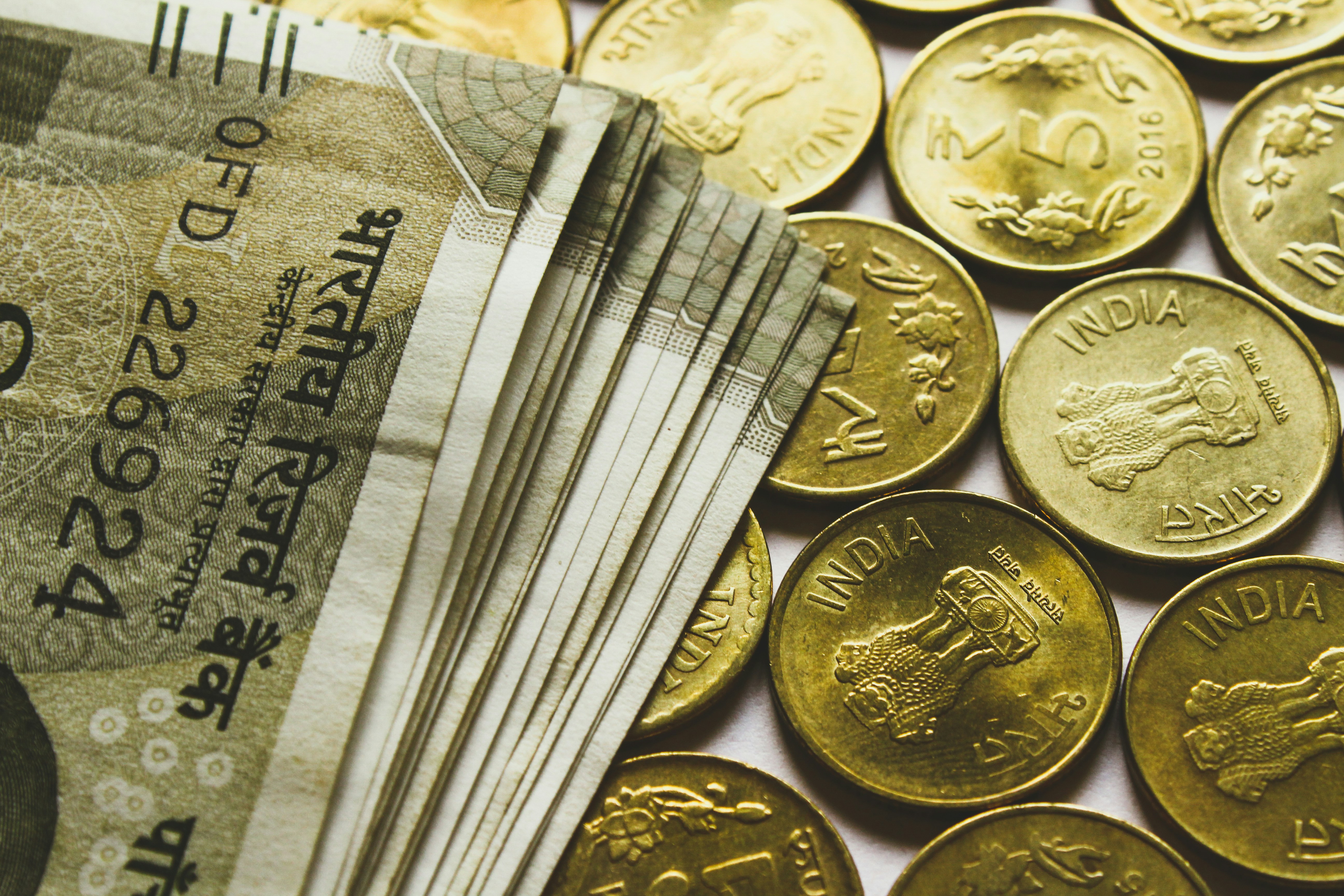
India’s central bank is juggling three goals with two hands. Something, eventually, has to give.
On 14 August, the Reserve Bank of India did something central banks almost never do. It turned off a tap because too much was coming out of it.
The tap was a special dollar–rupee swap facility, opened on 8 June, that made foreign-currency deposits from non-resident Indians unusually cheap for banks to raise — the RBI absorbed the entire hedging cost, so lenders could offer NRIs rates far above the ordinary 3–4 per cent. It was meant to run until 30 September. By 13 August, banks had mobilised $52.3 billion through FCNR(B) deposits alone. Add external commercial borrowings and overseas foreign-currency borrowings and the haul reached $56.85 billion. The RBI pulled the deadline forward to 31 August. Nine days earlier, Governor Sanjay Malhotra had told reporters the flows were robust and given no hint of an early exit.
For scale: Raghuram Rajan ran the same play in September 2013, during the taper tantrum, and raised roughly $34 billion over three months. The 2026 version beat that by half again, faster.
That is the good news. The more interesting question is why India needed the scheme at all, in a year when the economy grew 7.7 per cent and the policy rate sat at a comfortable 5.25 per cent.
The answer is a piece of economics old enough to have grey hair. The Mundell–Fleming trilemma — the “impossible trinity” — says a country can have any two of three things: free movement of capital across its borders, a stable exchange rate, and a monetary policy set for domestic conditions. Never all three. Open the capital account and fix the currency, and your interest rate is dictated from Washington. Keep monetary independence and open the account, and the currency moves wherever flows push it.
India has never picked cleanly, and that is deliberate. The capital account is partly open. The rupee is a managed float — the RBI insists it targets volatility, not levels. And the Monetary Policy Committee has a statutory 4 per cent inflation target. India therefore runs all three objectives at partial strength and pays for the privilege in constant, unglamorous micro-adjustment. Most years that works fine. 2026 stress-tested it.
Foreign portfolio investors have pulled roughly ₹2.4 trillion out of Indian equities so far in calendar 2026 — already more than the ₹1.66 trillion they withdrew across the whole of 2025. March was brutal on its own: ₹1.17 trillion in a single month. The causes stacked neatly. Punitive US tariffs through 2025 (a peak 50 per cent, cut to 18 per cent under the February 2026 interim trade framework). Conflict in West Asia from late February, and what it did to oil. A global rotation out of India and into the semiconductor trade in Taiwan and South Korea.
Then the tide turned. FPIs bought ₹20,200 crore of Indian equities in July — their first positive month after four negative ones — and another ₹16,621 crore in the first fortnight of August. Debt drew ₹29,211 crore in July under the general limit.
The bond side carries a subtler warning. On 31 July, Bloomberg Index Services deferred, for a second time, the entry of Indian government bonds into its Global Aggregate Index, saying announced reforms need to show up in day-to-day market practice before it will move. That defers an estimated $20–30 billion of passive money. India already carries the maximum 10 per cent weight in JP Morgan’s GBI-EM Global Diversified. The next leg of index-driven demand is not a formality.
The 10-year G-Sec was quoted near 6.83 per cent on 19 August, up about 33 basis points over twelve months. The US 10-year sat at 4.74 per cent, with the 30-year at its highest in nearly two decades. The Federal Reserve, under Chair Kevin Warsh, has held at 3.50–3.75 per cent all year, but the minutes of its July meeting — published on 19 August — record that many participants thought tightening would likely be necessary if inflation did not come down. Three officials dissented in favour of a hike.
Do the arithmetic from a foreign investor’s chair. Roughly 210 basis points of extra yield, in a currency that has lost about 10 per cent against the dollar over a year and which traded past 96 to the dollar at its weakest point this year. Hedge the currency and the carry largely disappears. Leave it unhedged and you are running an oil-price view, not a bond trade. That is the squeeze the RBI was staring at in June.
There is a second-order effect here that rarely makes the headlines. When a central bank sits on one side of that much dollar hedging, forward premia get stretched, and the cost of buying protection against a weaker rupee climbs even on days when the spot rate barely twitches. Importers and foreign funds that hedge are, in effect, paying for the spot market’s composure. Stability is never free. It is simply billed to a different line.
Retail inflation rose to 4.45 per cent in July, a 19-month high, with food at 5.52 per cent. The RBI expects the peak in the October–December quarter, then a decline. At its 3–5 August meeting the MPC voted unanimously to hold at 5.25 per cent, kept the neutral stance, raised its FY27 growth forecast to 6.7 per cent and trimmed its inflation projection to 5.0 per cent. Malhotra described the stance as neither dovish nor hawkish.
A rate hike would have defended the rupee. It would also have landed on a capex cycle, a housing market and a credit book that are, for once, all working at the same time. The RBI declined the trade.
“Faced with the classic choice, the RBI refused to make it. It kept rates where growth wanted them, kept the rupee roughly where it wanted it, and paid the difference by rewriting the rules on who may bring money in.”
The June package was the third side of the triangle, and it was substantial. The Fully Accessible Route was widened to longer-tenor government securities and sovereign green bonds. Concentration limits on FPIs outside the FAR were scrapped. Persons Resident Outside India were let into the Portfolio Investment Scheme for the first time, with the individual cap on a company’s paid-up capital lifted from 5 to 10 per cent and the aggregate ceiling from 10 to 24 per cent. Capital gains and interest on government securities were exempted from tax for foreign investors, backdated to 1 April 2026. PSUs got concessional swaps on overseas borrowings. Export proceeds went back to a nine-month realisation window. MUFG’s desk put the likely take at around $40 billion. The actual number was $56.85 billion.
It worked, on its own terms. Foreign exchange reserves rose $14.136 billion in the week ended 7 August to $707.002 billion — the sharpest weekly gain since late January — though still $21.49 billion shy of the record $728.49 billion set on 27 February. The rupee steadied in a 95.4–95.8 band, well off its weakest levels of the year. Part of the inflow has gone to unwinding the RBI’s forward book, which hit a record net short position of about $106.7 billion at end-May: a mountain of future dollar delivery obligations built up defending the currency without visibly draining spot reserves.
But there is a bill, and it is dated. The hedging subsidy is a quasi-fiscal cost sitting on the central bank’s books. The tax exemption is permanent revenue forgone against a problem that was framed as temporary. Three-to-five-year FCNR(B) money booked in mid-2026 comes due between 2029 and 2031 — a redemption cliff that will need either renewal on commercial terms or dollars. And the rupee liquidity created by converting $52 billion became a management headache in its own right, which is the plainest reading of why the window shut a month early.
Oil is the master variable. Brent has swung between roughly $86 and $92 in August on the state of the Strait of Hormuz, and a widely used street rule of thumb puts every $10 a barrel at more than half a percentage point on Indian headline inflation. Beyond that: the Fed on 15–16 September; the MPC on 5–7 October; the tail of the swap scheme, with banks able to execute FCNR(B) swaps until 11 September and the ECB and OFCB windows open to 31 December; and whether the July–August return of foreign equity money survives its first bad month.
It is worth saying clearly that India’s external position is not fragile. The current account deficit was 0.6 per cent of GDP in FY26. Remittances hit a record $143.6 billion. The rupee’s real effective exchange rate has fallen to roughly 91 against a neutral 100, which is why Malhotra has argued publicly that the currency is undervalued rather than overvalued — a claim the numbers support.
What India has is not a solvency problem but a financing one, and financing runs on a calendar. The trilemma has not been solved this year. It has been refinanced.
Sources
• Bloomberg — India Raises $50 Billion From Diaspora, Ends Swap Facility Early (14 Aug 2026) — FCNR(B) inflow of $52.3bn; $56.85bn total
• Business Standard — Inflows over $52 bn, RBI opts to shut FCNR(B) tap ahead of schedule — Deadline change; reserves detail
• Reserve Bank of India — Weekly Statistical Supplement — Foreign exchange reserves data
• IndiaBonds — RBI Monetary Policy August 2026 Highlights — Repo 5.25%, SDF 5.00%, MSF/Bank Rate 5.50%
• Forbes India — RBI MPC August 2026 live coverage and Governor’s remarks — Stance, inflation peak guidance, next MPC dates
• MoSPI — Consumer Price Index press release, July 2026 — CPI 4.45%; CFPI 5.52%
• MoSPI — Provisional Estimates of Annual GDP, FY 2025-26 — Real GDP growth 7.7% in FY26
• Business Standard — India records $7.1 bn current account surplus in Q4 FY26 — FY26 CAD $25.2bn, 0.6% of GDP
• Forbes India — India’s current account surplus at 0.7% of GDP in Q4FY26 — Remittances $143.6bn; FY26 FPI and reserve flows
• Business Standard — FPIs pour ₹16,621 crore into Indian equities in first half of August — Monthly FPI equity flow series for 2026
• NSDL — FPI Investment Reports — Primary FPI flow data
• Business Standard — India’s bond index journey: securing entry into global benchmarks — GBI-EM weight; Bloomberg consultation history
• EcoNiti — Bloomberg defers Indian government bonds’ entry into Global Aggregate Index — Deferral; $20–30bn passive flow estimate; FAR flows
• Bloomberg — India’s Central Bank Faces $100 Billion Forward Book Challenge on Rupee — Record $106.7bn net short forward position
• Business Standard — RBI likely used dollar deposit surge to cut record FX forward book — Forward book unwind; near-tenor concentration
• MUFG Research — Shoring up the Indian Rupee: RBI June 2026 Measures — Package detail; ~$40bn inflow estimate; 2013 comparison
• IMPRI — Financing India’s External Balance: An Assessment of RBI’s 2026 Measures — Trilemma framing of the June package
• Federal Reserve — FOMC statement, 29 July 2026 — Target range 3.50–3.75%; three dissents
• CNBC — Fed minutes, July 2026 — Committee views on further tightening
• KPMG — US removes additional tariffs on imports from India (Feb 2026) — Interim framework; 18% reciprocal tariff
• Trading Economics — India 10-Year Government Bond Yield — G-Sec yield, US yields, Brent context
• Trading Economics — Indian Rupee — USD/INR levels and 12-month move
• Business Standard — RBI Governor Malhotra on rupee depreciation and market-determined pricing — Intervention philosophy
• Policy Circle — RBI monetary policy and the rupee’s warning signals — REER trajectory and undervaluation
Sign in to join the discussion.

Net household financial savings climbed to 7 per cent of GNDI in FY25 — not because families saved more, but because they borrowed less.

Reserves have added nearly $50 billion in seven weeks, yet the rupee barely moves. The RBI's forward book reveals what intervention is really optimising for.

Brent is back near $95 and the Urals discount has vanished. We map how crude and LNG bands move India's current account, deficit and inflation.

FY26 delivered 7.7% real growth on a 1.1% deflator. That gap flattered volumes, starved tax collections, and blew a 210-basis-point hole in the debt ratio.