Economy
State Finances: The Silent Fiscal Risk of the Union
India's fiscal debate watches the Centre. The real pressure is building quietly in state budgets.
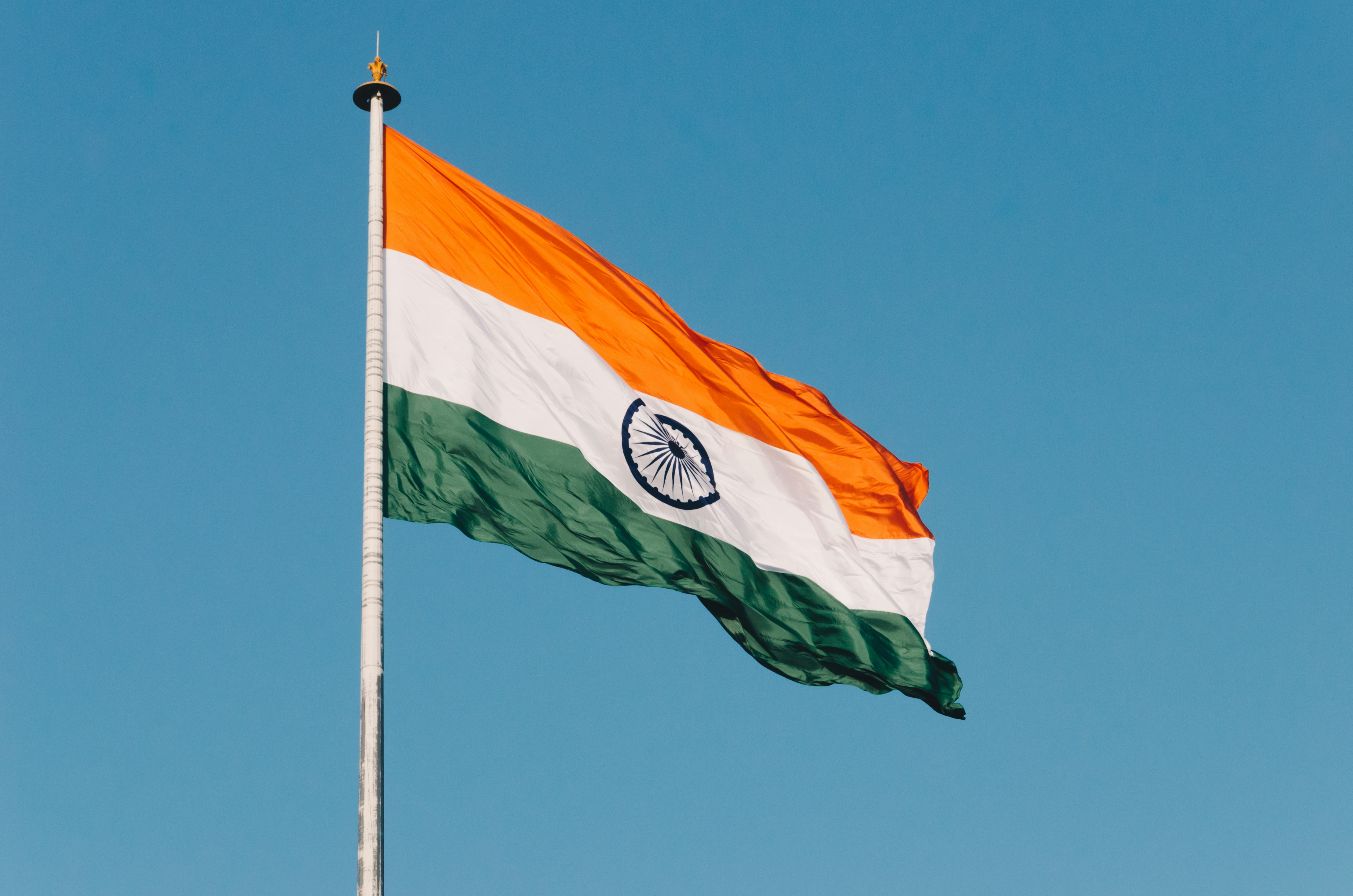
India's fiscal debate watches the Centre. The real pressure is building quietly in state budgets.
Every February, India performs a familiar ritual. The Finance Minister stands up, reads out a fiscal deficit number, and an entire industry of analysts spends the next fortnight arguing about whether it is credible. In 2026, as always, that number was the Centre's.
Meanwhile, across the January-March quarter of 2025-26, India's states quietly went to the bond market to raise a record five trillion rupees. Nobody announced it in Parliament. No televised speech, no post-Budget panel. It simply happened, auction by auction, Tuesday after Tuesday.
That gap between where the attention goes and where the borrowing actually happens is the subject of this article.
Start with scale. In 2025-26, states were on track to raise gross market borrowings of roughly Rs 12.5 lakh crore against the Centre's Rs 14.6 lakh crore. Subnational India is now very nearly the equal of the sovereign as a debt issuer — and increasingly dependent on that market: the share of market borrowings in financing states' gross fiscal deficit rose to 76.3% in 2025-26 (budget estimates) from 71.8% a year earlier, per the RBI's Annual Report.
The aggregate picture, to be fair, is not alarming. The RBI's State Finances: A Study of Budgets of 2025-26 puts the consolidated gross fiscal deficit of states at 3.3% of GDP, and outstanding liabilities at 28.1% of GDP as of March 2024, budgeted to rise to 29.2% by March 2026. Interest payments have stayed within a manageable 1.5-1.9% band. Read only the headline and everything looks fine.
Aggregates are where fiscal risk goes to hide.
Because “the states” is not a thing. It is 28 balance sheets with wildly different capacities to service debt. PRS Legislative Research's State of State Finances 2025 found that only three — Gujarat, Maharashtra and Odisha — meet the 20% debt-to-GSDP ceiling the FRBM Review Committee recommended in 2017. Between 2016 and 2025, states' interest payments grew at roughly 10% a year while revenues grew at 9.2%. That is a slow-motion squeeze, and compound interest is patient.
Here is the number that should worry anyone modelling state finances: in 2023-24, states collectively spent 62% of their revenue receipts on salaries, pensions, interest payments and subsidies. On 2025-26 budget estimates, salaries, pensions and interest alone absorb about half of revenue receipts.
None of this is discretionary. You cannot un-hire a teacher, un-pension a retiree, or politely decline to service a bond. So the marginal rupee of fiscal stress lands almost entirely on capital outlay — the roads, hospitals and transmission lines that a state's future revenue depends on. Karnataka's own CAG report noted that five welfare schemes contributed to the state trimming around Rs 5,000 crore of infrastructure spending in 2023-24. That is the trade-off, made visible.
“The Union's fiscal deficit is a headline. The states' fiscal deficit is a footnote. The bond market, sooner or later, reads both.”
For most of the last decade the standard reassurance was that GST would deliver buoyancy. It has — but from a lower base than states had banked on. PRS estimates that revenue from the taxes subsumed into GST fell from 6.5% of GDP in 2015-16 to 5.5% in 2023-24, against the 15th Finance Commission's medium-term working assumption of about 7%.
Then came two structural changes in quick succession. The 56th GST Council meeting in September 2025 collapsed four slabs into two — 5% and 18%, plus a 40% demerit rate — effective 22 September 2025, and the compensation cess was discontinued for everything bar tobacco. Eight states had asked for a fresh compensation mechanism before the Council met. They did not get one. GST revenue growth slowed to 5.6% in 2025-26 from 9.4% the year before, though SBI Research expects a recovery to 8-9% as the rate cuts feed consumption.
The point is not that GST 2.0 was a mistake. It is that states absorbed a revenue shock and lost their safety net in the same quarter, while their expenditure commitments did not move an inch.
Chief among them is a genuinely new one. The number of states running large unconditional cash transfer schemes for women rose from two in 2022-23 to twelve in 2025-26, with a combined budget of Rs 1.68 lakh crore — roughly 0.5% of India's GDP, more than double the share of two years earlier. Six of the twelve were already in revenue deficit.
These schemes are politically irreversible in a way capital projects are not. You can defer a flyover. You cannot easily stop a monthly credit landing in sixteen million bank accounts. So states trim at the edges instead. Maharashtra cut the Ladki Bahin payout for women already drawing another state transfer, tightened verification and reduced the allocation sharply; beneficiaries fell from about 2.4 crore to 1.66 crore. Fiscal reality arrives, eventually, disguised as an e-KYC requirement.
State budgets understate exposure in at least two ways.
The first is power. Distribution utilities carried borrowings of about Rs 7.53 lakh crore as of March 2024, a negative net worth of Rs 1.73 lakh crore, and all-India AT&C losses that rose to 16.12% in 2023-24 from 15.11%. There is real good news — Power Finance Corporation data show discoms posted a collective profit of Rs 2,701 crore in 2024-25, their first in over a decade — but against accumulated losses of roughly Rs 6.47 lakh crore, the sector has stopped digging rather than climbed out. Since states own these companies and guarantee their borrowing, that is a contingent liability sitting one bad tariff cycle away from the budget.
The second is guarantees more broadly. An RBI working group in 2023 recommended a ceiling of 5% of revenue receipts or 0.5% of GSDP, whichever is lower. Several states are comfortably past it, and disclosure is inconsistent enough that comparing them is forensic work.
Two further shocks are already visible. The 8th Central Pay Commission, chaired by Justice Ranjana Prakash Desai, carries a reference date of 1 January 2026 and reports within eighteen months of November 2025. States employ far more people than the Centre, and independent estimates put their extra annual burden at Rs 2.3-2.5 lakh crore. The RBI's 2025-26 study separately flags demographic divergence: Kerala's median age is 37 against Bihar's 23, and ageing states already carry higher debt and higher interest-to-revenue ratios. Pensions are not a 2040 problem for them. They are a 2028 problem.
Tabled on 1 February 2026, the Panagariya Commission's report reads less like an entitlement document than a compliance one. It held the states' share of the divisible pool at 41% — eighteen states had pushed for 50% — and added a 10% weight for a state's contribution to national GDP, dropping the old tax-effort criterion.
On the fiscal rules, it was blunt. It capped state fiscal deficits at 3% of GSDP, called for off-budget borrowings to be discontinued entirely and brought onto the books, and asked states to amend their FRBM laws for uniformity. It told them to define and disclose subsidies consistently, noting that these are routinely misclassified as grants or “assistance”. It warned about the targeting of unconditional cash transfers, and pushed discom privatisation with a special purpose vehicle to warehouse legacy debt. In the sharpest break with precedent, it scrapped revenue deficit grants altogether, reasoning that a state expecting its shortfall to be topped up has little incentive to reform.
The Commission projects combined Centre-and-state debt falling from 77.3% of GDP in 2026-27 to 73.1% by 2030-31. That projection is conditional on states doing several things they have not historically done.
Bond markets do not price Indian states individually in any serious way. Spreads on state development loans stay compressed, partly because investors assume — reasonably — that no state will be allowed to default. That assumption is itself the fiscal risk: the Union carries a contingent liability it has never priced, budgeted or disclosed.
The Centre has also become an enabler. The Special Assistance to States for Capital Investment scheme, which lends 50-year interest-free money outside normal borrowing ceilings, is budgeted at Rs 1.85 lakh crore for 2026-27, up from Rs 1.44 lakh crore released in 2025-26. Useful for capex, undoubtedly — but it is still debt, and part of the recent widening in states' headline deficit is precisely this.
The IMF's 2025 Article IV consultation made the structural point plainly: India's debt anchor should be broadened to include state government debt, because state fiscal sustainability is central to macroeconomic stability and compliance with existing frameworks is weak. General government debt runs at roughly 82% of GDP. About a third is the states' — the third with the least transparency, the weakest market discipline and the heaviest political pressure.
The RBI has started nudging. From 2026-27 it is piloting a Benchmark Issuance Strategy for state bonds, beginning with nine states and since extended to ten more jurisdictions, so issuance follows pre-announced tenor buckets rather than improvisation. It is a small technical fix that quietly admits a large problem: nobody, investors included, has had a clear view of what the states were doing.
None of this is a crisis. It is something more dangerous in policy terms — a slow, unglamorous accumulation of risk in a place where the reporting is annual, the data arrives late, and the attention is elsewhere. The 16th Finance Commission has handed the states a rulebook. Whether anyone chooses to enforce it is the fiscal question that will actually matter over the next five years.
All figures in this article are drawn from the following primary and secondary sources.
1. Reserve Bank of India — State Finances: A Study of Budgets (annual publication)
2. PRS Legislative Research — Report of the 16th Finance Commission for 2026-31
3. PRS Legislative Research — State of State Finances 2025 (full report, PDF)
4. PRS Legislative Research — State of State Finances 2025 (landing page)
5. PRS Legislative Research — Union Budget 2026-27 Analysis (PDF)
6. IMF — India: 2025 Article IV Consultation, Staff Report (PDF)
7. Business Standard — 16th Finance Commission retains 41% devolution, introduces GDP criterion
8. Business Standard — States' market borrowing share in deficit funding rises to 76.3% in FY26: RBI
9. Business Standard — Indian states likely to borrow record Rs 5 trillion in Q4 of FY26: RBI
10. Business Standard — RBI extends Benchmark Issuance Strategy for SDLs to 10 more jurisdictions
11. Business Standard — From splurge to squeeze: Women's cash schemes face fiscal reality
12. Business Standard — States' salary, pension, interest expenses rise 2.5 times since FY14: CAG
13. Business Today — Eight states seek compensation mechanism after GST rate rationalisation
14. Business Today — GST compensation cess is gone: SBI Research on state revenues
15. Power Line — Key highlights of PFC's report on state power utilities, 2023-24
17. Deccan Herald — 12 states to spend Rs 1.68 lakh crore on women's cash schemes: PRS
18. Deccan Herald — Cabinet approves Terms of Reference of the 8th Pay Commission
19. Prasar Bharati / News on AIR — 16th Finance Commission report laid in Lok Sabha
20. Department of Economic Affairs — Government borrowing plan, H1 FY 2026-27 (PDF)
Sign in to join the discussion.

Net household financial savings climbed to 7 per cent of GNDI in FY25 — not because families saved more, but because they borrowed less.
Reserves have added nearly $50 billion in seven weeks, yet the rupee barely moves. The RBI's forward book reveals what intervention is really optimising for.

Brent is back near $95 and the Urals discount has vanished. We map how crude and LNG bands move India's current account, deficit and inflation.

FY26 delivered 7.7% real growth on a 1.1% deflator. That gap flattered volumes, starved tax collections, and blew a 210-basis-point hole in the debt ratio.