Policy
India's Trade Policy: Between Strategic Autonomy and Integration
How India spent eighteen months bargaining with Washington, Brussels and London without surrendering policy independence.
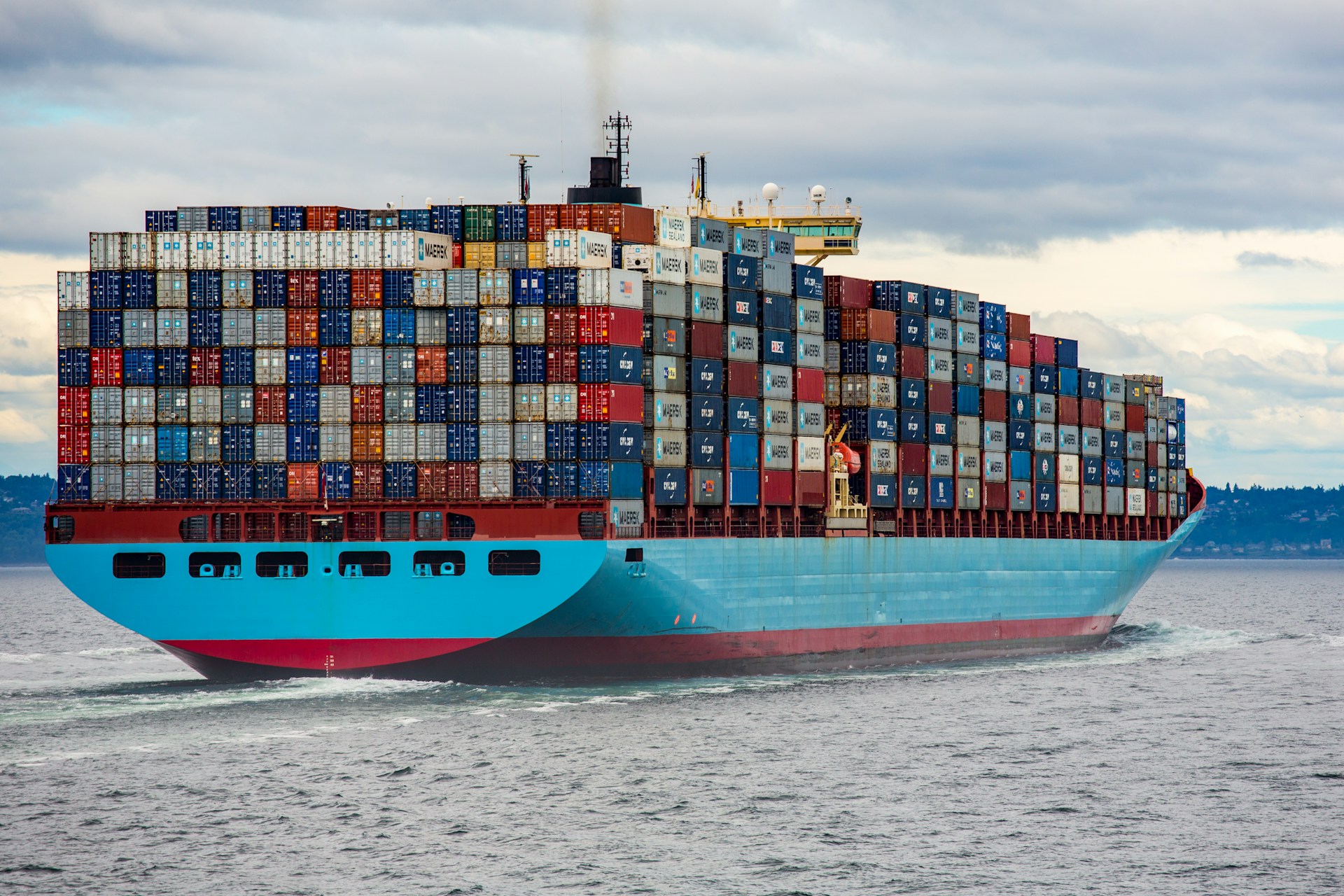
How India spent eighteen months bargaining with Washington, Brussels and London without surrendering policy independence.
There is an old joke in Delhi's trade circles that India negotiates free trade agreements the way it builds flyovers — nothing happens for a decade, then three open in the same week. The joke has stopped being funny, mostly because it stopped being accurate.
Between August 2025 and July 2026, India absorbed a 50% American tariff wall, watched that wall collapse under a Supreme Court judgment, closed the largest trade agreement in its history with the European Union, brought a comprehensive pact with the United Kingdom into force, and signed another with New Zealand. Very little of this was planned as a coherent doctrine. Most of it was improvised under pressure.
Which is precisely what makes it revealing. Indian trade policy today is not a settled position. It is a running argument between two instincts that do not sit comfortably together: the wish to stay unbound, and the need to stay plugged in.
The shock arrived on 27 August 2025, when Washington stacked a 25% penalty for India's Russian crude purchases on top of an existing 25% reciprocal tariff. Fifty per cent. Overnight, Indian shrimp, carpets, gems, garments and machine parts became among the most expensive goods entering the world's largest consumer market, and the “China plus one” pitch that Indian exporters had spent five years perfecting lost most of its arithmetic.
The de-escalation, when it came, was abrupt. A phone call between Prime Minister Narendra Modi and President Donald Trump in early February 2026 produced a joint statement on 6 February setting out a framework for an interim agreement. The 25% penalty tariff went first, removed by executive order effective 7 February. The reciprocal rate was to fall from 25% to 18%. In return, India agreed to eliminate or reduce duties on all US industrial goods and a broad list of agricultural products — distillers' grains, red sorghum, nuts, fruit, soybean oil, wine and spirits — and signalled an intent to buy US$500 billion of American energy, aircraft, precious metals, technology goods and coking coal over five years.
Commerce Minister Piyush Goyal briefed the press with the number that mattered domestically: at 18%, India would face a lower tariff than China, Vietnam, Bangladesh or Pakistan. Spices, tea, coffee, cashew and mango would enter duty-free. Agriculture and dairy, he stressed, had been protected.
It was, on paper, a decent outcome from a bad position. It lasted a fortnight.
On 20 February 2026, in Learning Resources, Inc. v. Trump, the US Supreme Court held 6–3 that the International Emergency Economic Powers Act does not authorise the President to impose tariffs at all. The statutory floor beneath the entire reciprocal tariff architecture simply gave way — and with it, India's negotiated 18%.
Within hours the White House reached for Section 122 of the Trade Act of 1974, a balance-of-payments provision capped at 15% and 150 days, and imposed a flat 10% surcharge on nearly all imports from 24 February. India's Commerce Secretary Rajesh Agrawal confirmed in March what the market had already worked out: the reciprocal tariffs were no longer in force. The Indian delegation due in Washington to finalise the interim agreement's legal text stayed home.
“A concession negotiated against a tariff that a court can vacate is not a concession made against law. It is a concession made against weather.”
The weather kept changing. On 7 May the US Court of International Trade held the Section 122 surcharge unlawful, though relief ran only to the named plaintiffs. The surcharge then expired on its own terms on 24 July 2026, no congressional extension having arrived. By then the administration had already built its replacement on firmer statutory ground.
This is where the strategic autonomy question gets uncomfortably concrete.
In March 2026 the US Trade Representative opened Section 301 investigations into whether 60 economies were enforcing prohibitions on goods made with forced labour. A June draft proposed an additional 12.5% duty on 54 of them, India included. At a public hearing on 8 July, India's Department of Commerce argued that the report offered no country-specific or sector-specific evidence, and that the absence of a domestic import ban did not by itself meet the legal threshold for calling a practice unreasonable.
Five days later, India enacted the ban anyway. A DGFT gazette notification dated 13 July 2026 amended the Foreign Trade Policy 2023 to prohibit the import of goods produced or manufactured, wholly or in part, using forced labour, adopting the definition in ILO Convention No. 29. It named no goods and no countries; it created an enquiry procedure the DGFT would run under the Handbook of Procedures.
On 23 July, USTR placed India in the lower tier at 10% rather than 12.5%, alongside seventeen economies including Bangladesh, Canada, Indonesia, Mexico, Sri Lanka and the United Kingdom. Roughly 45% of India's exports to the US — generic pharmaceuticals and smartphones prominent among them — were exempted entirely.
Read one way, this is textbook strategic autonomy: India legislated on its own authority, using its own institutions, against a standard it had already ratified internationally. Read another, the timing tells you everything. A domestic trade instrument was drafted to a foreign agency's calendar, and the return was 250 basis points. Both readings are correct, which is the whole problem.
While Washington absorbed most of the attention, the more consequential integration happened elsewhere.
On 15 July 2026 the India–UK Comprehensive Economic and Trade Agreement entered into force, alongside the Double Contribution Convention on social security. Ninety-nine per cent of Indian-origin goods now enter the UK duty-free or at reduced rates; India reduces or eliminates tariffs on 90% of tariff lines covering 92% of UK exports, with 64% duty-free from day one. The social security convention exempts temporary Indian workers and their employers from UK National Insurance for up to five years — raised from three shortly before switch-on — covering some 75,000 professionals. The CBIC notified the rules of origin on 3 July, twelve days ahead of commencement.
Six months earlier, on 27 January 2026, India and the European Union concluded negotiations that had begun in 2007, been suspended in 2013, and been revived in 2022. Ursula von der Leyen called it the “mother of all deals”, which is the sort of thing you can say when the resulting free trade area covers two billion people. Liberalisation coverage runs to 96.6% for India and 99.3% for the EU, across a relationship already worth more than €180 billion in goods and services a year. The EU becomes India's twenty-second FTA partner. Ratification is pending on both sides; entry into force is not expected before early 2027.
Add the New Zealand FTA signed on 27 April 2026, live negotiations with the Gulf Cooperation Council, Peru, Chile and Israel, a CECA upgrade with Australia, and the long-running review of the ASEAN–India Trade in Goods Agreement, and the pattern becomes legible.
India signs with economies that complement it. It does not sign with economies that compete with it in manufacturing. RCEP remains untouched. The AITIGA review is, in substance, an attempt to renegotiate a deal Delhi believes it lost the first time.
FY2025–26 produced a record: total exports of goods and services reached US$863.11 billion, up 4.6% from US$825.26 billion. The composition matters more than the headline. Services surged 8.71% to US$421.32 billion. Merchandise exports grew 0.93%, to US$441.78 billion. Among FTA partners, ASEAN took US$38.42 billion of Indian goods, the UAE US$37.36 billion, SAFTA countries US$25.77 billion, the UK US$13.44 billion.
The current year has started better. July 2026 merchandise exports hit US$44.24 billion, up 19.63% year-on-year and the highest July on record, driven by petroleum products, electronics and engineering goods. Total exports crossed US$80 billion in a single month.
The deficit tells the other half. July's overall trade gap widened 31.5% to US$15.03 billion. Across April–July, it went from US$32.32 billion to US$49.43 billion — imports growing faster than exports from a much larger base. Record export months and a widening deficit are entirely compatible, and anyone quoting one without the other is selling something.
Strategic autonomy in 2026 no longer means refusing to integrate. India has integrated — selectively, and mostly with partners who buy what it sells rather than sell what it makes. What autonomy now means is retaining the right to choose partners, sequence concessions, and hold certain sectors closed. Agriculture and dairy held through the American negotiation, and farm unions made sure everyone knew the price of moving them.
But optionality is not free. Twenty-two FTA partners means twenty-two rules-of-origin regimes, twenty-two certificate-of-origin workflows, and a customs administration that must police preference claims under CAROTAR without strangling the trade it is meant to facilitate. Utilisation, not signature, is where these agreements succeed or quietly fail — the UAE CEPA's 4.45 lakh certificates of origin are the benchmark, and most of India's newer agreements are nowhere near it.
The honest verdict is that India has been fast, and lucky, and is now committed to a great deal of implementation work that no press release can do for it. The test will not be the next joint statement. It will be the FY2027–28 numbers, and whether exporters in Tiruppur and Surat can actually claim the preferences that Delhi negotiated on their behalf.
All figures verified against primary government, court and institutional sources. Links live as of 21 August 2026.
▪ United States–India Joint Statement (6 February 2026) — The White House
▪ Fact Sheet: The United States and India Announce Historic Trade Deal — The White House
▪ India–US Trade Deal Cuts Tariff on Indian Exports to 18%: Piyush Goyal — News On Air (Prasar Bharati)
▪ Supreme Court Rules Against Tariffs Imposed Under IEEPA (LSB11398) — Congressional Research Service
▪ IEEPA Tariffs Terminated, Replacement Section 122 Tariffs Take Effect — Covington & Burling LLP
▪ Supreme Court Strikes Down IEEPA Tariffs: What Importers Need to Know — Holland & Knight
▪ US Trade Court Strikes Down Section 122 Tariffs — Skadden, Arps, Slate, Meagher & Flom LLP
▪ India remains engaged with US for mutually beneficial trade agreement: Commerce Secretary — News On Air (Prasar Bharati)
▪ Govt amends trade policy, bans import of goods produced with forced labour — Business Standard
▪ India seeks review of US Section 301 forced-labour tariff — EcoNiti
▪ Section 301 Forced Labor Tariffs: what changed on 24 July 2026 — C.H. Robinson
▪ India–UK CETA and Social Security Agreement enter into force on 15 July 2026 — Press Information Bureau, Government of India
▪ UK–India Free Trade Agreement enters into force — Baker McKenzie Global Import Blog
▪ Historic UK–India trade deal enters into force — now comes implementation — ODI Global
▪ India–EU Free Trade Agreement Concluded (27 January 2026) — Ministry of Commerce & Industry, Government of India
▪ The EU–India trade agreement — European Commission
▪ EU–India FTA Concluded: Major Global Trade Milestone — European Commission — IP Helpdesk
▪ India's total exports reach record $863.1 billion in 2025-26 — News On Air (Prasar Bharati)
▪ India's trade deficit widens 31.5% to $15.03 billion in July; merchandise exports hit record high — ANI / The Tribune
▪ Monthly trade data releases, Department of Commerce — Press Information Bureau, Government of India
▪ India pushes to upgrade ASEAN FTA, advances talks on CECA with Australia — The Tribune / ANI
▪ India–New Zealand FTA signed, 27 April 2026 — India Briefing (Dezan Shira & Associates)
▪ Brookings experts on the Supreme Court's tariff decision — Brookings Institution
Sign in to join the discussion.
The 4.5% deficit target has been met and quietly retired. India now anchors fiscal policy to debt-to-GDP — a slower, harder discipline that arithmetic will not flatter.
From 50% American tariffs to the EU's “mother of all deals”, India's trade policy has been rewritten in eighteen months. What it gained, and conceded.