Policy
The Fiscal Consolidation Roadmap: Beyond the 4.5% Target
India cleared its 4.5% fiscal deficit goal. The harder target — debt — is only now beginning.
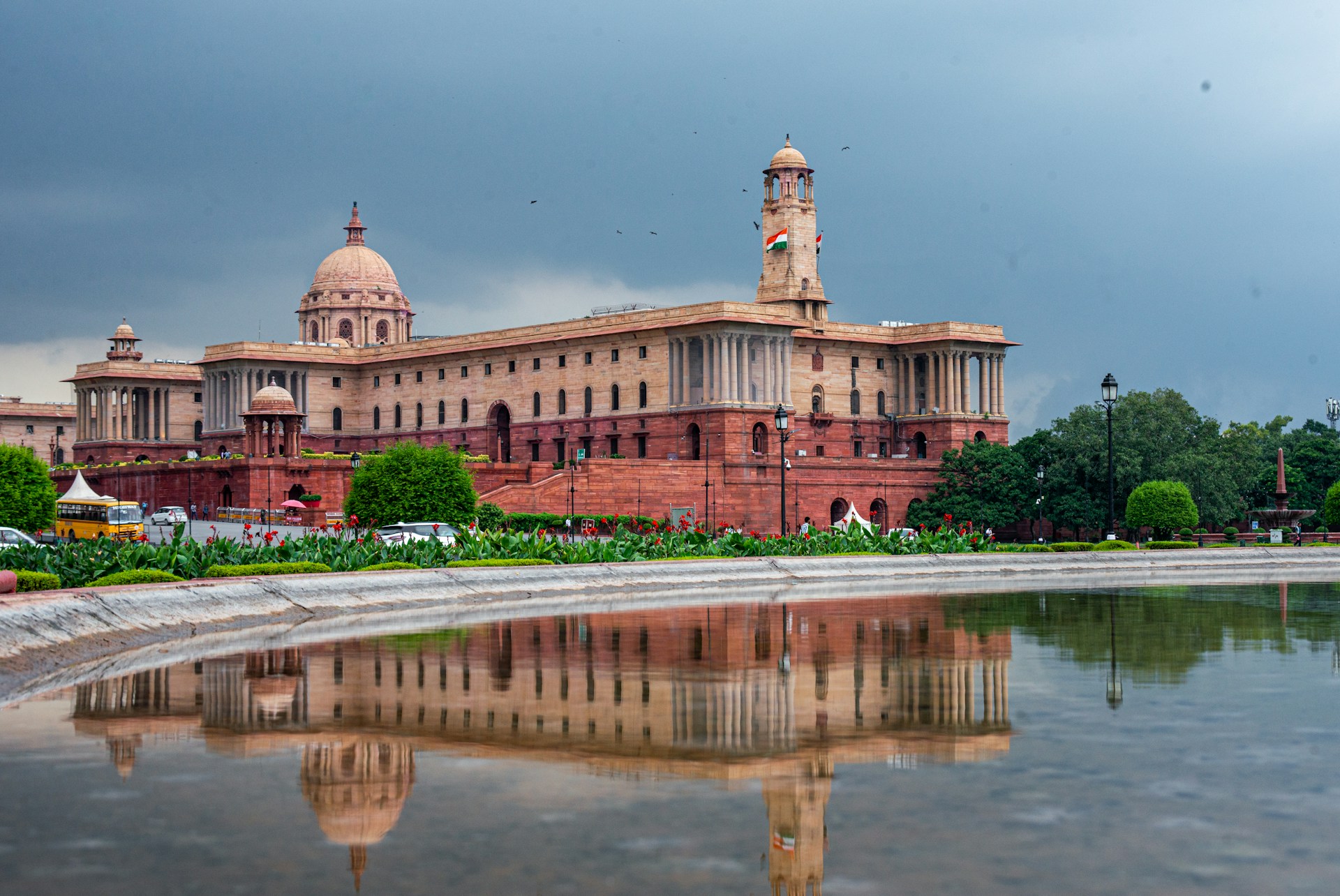
India cleared its 4.5% fiscal deficit goal. The harder target — debt — is only now beginning.
For four years, one number did most of the talking in Indian fiscal policy. Four and a half per cent. It was set out in the 2021-22 Budget as the landing zone for the long climb down from a pandemic-era fiscal deficit of 9.2% of GDP, and it became the yardstick for everything — Budget speeches, monthly releases from the Controller General of Accounts, and every rating note that opened with some version of the line that India's fiscal metrics remain a credit weakness.
That number has now been met, cleared, and quietly retired.
The Centre closed 2025-26 with a fiscal deficit of ₹15.19 lakh crore — 4.4% of GDP, in line with the revised estimate and inside the promise. The Union Budget for 2026-27, presented on 1 February, pencils in 4.3%. On the old scoreboard, this is a clean win. Governments have missed softer targets by wider margins and still claimed victory.
The complication is that the scoreboard itself has been replaced.
Since the FY26 Budget, the Centre's stated fiscal anchor is no longer the deficit at all. It is debt. The commitment is to bring central government liabilities down to 50% of GDP, give or take one percentage point, by 31 March 2031. This year's Medium Term Fiscal Policy Statement went a step further and called the fiscal deficit what it now is — an "operational target". The lever, not the destination.
It is a more honest framework. A deficit target tells you how quickly the pile is growing. A debt target tells you how big the pile already is. Only one of those is what a lender actually prices.
It is also a good deal less flattering. Central liabilities are budgeted at 55.6% of GDP in FY27, down from 56.1% in FY26. That is a 50 basis point improvement in a year in which nominal GDP is assumed to grow at 10%. To travel from 55.6% to 51% in four years, that pace has to hold — or improve — every single year, through state elections, a pay commission cycle, and whatever the world decides to do next.
The framework does at least admit its own dependencies. The Medium Term Fiscal Policy Statement models the debt path across three nominal growth assumptions — 10%, 10.5% and 11% — and, within each, three consolidation intensities described as mild, moderate and high. That is unusually candid for a Budget annexe, and it makes the underlying point hard to miss: the 50% destination is not a single road but a fan of them, and which one India ends up on depends as much on the denominator as on anything the Finance Ministry chooses to do.
Here is where it gets uncomfortable. The 55.6% figure is the Centre's own debt. India is a federation, and creditors read the consolidated statement.
The 16th Finance Commission, chaired by Arvind Panagariya, whose report was tabled alongside the Budget on 1 February 2026, projects combined Centre-plus-state debt falling from 77.3% of GDP in 2026-27 to 73.1% by 2030-31. Fitch, which affirmed India at 'BBB-' with a stable outlook on 11 August 2026, is blunter. It puts general government debt at 84.4% of GDP in FY26 against a 'BBB' median of 57%, and expects a slow drift down to roughly 79% by FY31 on assumed nominal growth of 10.5%.
The distance between 73% and 79% is not a rounding error, and it is not purely pessimism. It is definitional — coverage of public account liabilities, off-budget borrowing, and state-level obligations that never surface in a Budget document. Which is precisely why the 16th FC recommended that the definitions of both debt and fiscal deficit be widened to uniformly capture all off-budget borrowings, and that states abandon the practice altogether.
Measurement reform is not glamorous. It is, however, the single change most likely to move a rating.
“A deficit tells you how fast you are borrowing. Debt tells you what you have already promised. India has finally started grading itself on the harder subject.”
The reason a debt anchor bites is visible in a single line of the expenditure budget.
Interest payments in 2026-27 are estimated at ₹14.04 lakh crore. That is 26% of everything the Union government will spend, and 40% of its revenue receipts — up from 37% in FY25. Add salaries and pensions and roughly 65% of revenue receipts are committed before a single new scheme is funded.
This is the compounding trap in plain sight. Debt raises interest costs, interest costs eat revenue, a thinner revenue base leaves less room to run primary surpluses, and the ratio then falls only as fast as nominal GDP can outrun it. India's primary deficit is budgeted at just 0.7% of GDP in FY27, which is genuinely encouraging — but it also means the debt path now leans almost entirely on growth doing the work.
To the government's credit, consolidation has not been bought by starving investment. Capital expenditure rises 11.5% to ₹12.2 lakh crore, and the disinvestment target has been lifted to ₹80,000 crore — the first increase after five consecutive years of downward revisions. Whether that target survives contact with reality is a separate question. FY26 delivered ₹33,837 crore against a budgeted ₹47,000 crore.
States carry roughly a third of general government debt and a disproportionate share of the risk.
Their combined gross fiscal deficit crossed 3% of GDP in 2024-25 for the first time in three years, and has been budgeted at 3.3% again for 2025-26. Aggregate state debt, which had fallen to 28.1% of GDP by March 2024, is expected to climb back to about 29.2% by March 2026 — well above the 20% benchmark the FRBM Review Committee once recommended.
The driver is not mysterious. Twelve states now run largely unconditional cash transfer schemes for women, together budgeting roughly ₹1.68 lakh crore in 2025-26, up from two states three years earlier. Six of those twelve are running revenue deficits. The RBI has separately flagged that states spending more than 15% of revenue on debt servicing put less than 2% of GSDP into capital outlay, against a 2.7% average — welfare crowding out roads, quietly, one budget at a time.
The 16th FC's answer is a hard 3% of GSDP annual deficit cap for states, an end to off-budget borrowing, DISCOM privatisation with legacy debt parked in a special purpose vehicle, and access to central capital assistance made conditional on reform. It is a decisive shift from entitlement to compliance. It will be tested politically long before 2031.
What the Commission did not do is give the Centre more room. States' share of the divisible pool stays at 41%, unchanged from the 15th FC award. Revenue deficit grants and sector-specific grants have been discontinued, and a new 10% weight for a state's contribution to national GDP has replaced the old tax-effort criterion. The redistribution is real, but the vertical arithmetic is untouched — meaning the Union's route to a lower debt ratio still runs through its own revenue and expenditure, not through a renegotiated split.
None of this was meant to be examined in year one. The West Asia conflict had other plans.
With Brent hovering in the nineties and Strait of Hormuz disruption feeding through into energy and fertiliser costs, ICRA now expects the FY27 fiscal deficit to print near 4.7% against the budgeted 4.3% — roughly ₹1.3 trillion of net fiscal impact, plus another 10 basis points from a weaker nominal GDP base. The Centre has set up a ₹1 lakh crore Economic Stabilisation Fund for oil hedging. BMI expects a breach as well.
The early data is calmer than the commentary. At the end of June 2026, the fiscal deficit stood at 18.2% of the full-year estimate, barely above the 17.9% recorded at the same point a year earlier, with net tax revenue at 22.2% of Budget Estimates against 19% last year. Capital spending grew 23.7% year-on-year. Major subsidies, though, jumped 37.4%, with the fertiliser bill up nearly 58%.
Which is, in fairness, exactly the scenario a debt anchor is built for. A multi-year debt target can absorb one bad year and stay credible. A rigid annual deficit rule cannot — it simply invites creative accounting instead.
Three things, none of which fit neatly on a slide.
First, flexibility needs a written escape clause. The FRBM Act still requires three-year rolling targets; the government has not published them since 2021-22. Discretion without disclosure is not a framework, it is a habit — and habits are precisely what rating committees discount.
Second, the arithmetic needs a revenue leg. Gross tax revenue is budgeted to grow 8% in FY27 against 10% nominal GDP growth, which means a falling tax-to-GDP ratio in a year that already saw income tax collections undershoot by ₹1.26 lakh crore. Debt ratios do not decline on capex discipline and dividend windfalls alone.
Third, the 16th FC's recommendation that the Centre reach a 3.5% fiscal deficit by 2030-31 should be treated as the operational spine of the 50% debt target, not a parallel suggestion tabled on the same afternoon. Two roadmaps in one Budget session is one too many.
The 4.5% era closed with the Centre doing more or less what it said it would do, which — measured against the global track record on fiscal targets — is not nothing. But the next decade will be graded differently. Not on whether the deficit lands within a decimal point each February, but on whether the debt ratio is still falling in 2031, and on whether anyone can agree on how it was measured.
1. PRS Legislative Research — Union Budget 2026-27 Analysis — https://prsindia.org/files/budget/budget_parliament/2026/Union_Budget_Analysis-2026-27.pdf
2. PRS Legislative Research — Report of the 16th Finance Commission for 2026-31 — https://prsindia.org/policy/report-summaries/report-of-the-16th-finance-commission-for-2026-31
3. PRS Legislative Research — State of State Finances 2025 — https://prsindia.org/files/budget/SOSF_2025.pdf
4. Business Standard — Budget 2026: Debt-to-GDP ratio to ease by 50 bps to 55.6% in FY27 — https://www.business-standard.com/budget/news/budget-2026-debt-to-gdp-ratio-to-ease-by-50-bps-to-55-6-in-fy27-126020101049_1.html
5. Business Standard — India's FY26 fiscal deficit at 4.4% of GDP (CGA provisional actuals) — https://www.business-standard.com/economy/news/fiscal-deficit-stands-at-4-4-of-gdp-in-fy26-in-line-with-govt-estimates-126060101634_1.html
6. Business Standard — Centre keeps fiscal deficit in check in Q1 FY27 despite West Asia crisis — https://www.business-standard.com/economy/news/centre-keeps-fiscal-deficit-in-check-in-q1-despite-west-asia-crisis-126073101618_1.html
7. Business Standard — Fitch affirms India's BBB- sovereign rating, retains stable outlook (11 Aug 2026) — https://www.business-standard.com/economy/news/fitch-affirms-india-s-bbb-sovereign-rating-retains-stable-outlook-126081101694_1.html
8. Reuters via Investing.com — Fitch affirms India's 'BBB-' rating; general government debt at 84.4% of GDP — https://www.investing.com/news/stock-market-news/fitch-affirms-indias-bbb-credit-rating-with-stable-outlook-4850950
9. Business Standard — Aditi Nayar (ICRA): India's fiscal deficit may rise to 4.7% of GDP in FY27 — https://www.business-standard.com/amp/economy/analysis/india-fiscal-deficit-fy27-may-rise-to-4-7-percent-icra-west-asia-war-oil-prices-126060300100_1.html
10. ThePrint — Fiscal deficit touches 18.2% of full-year target in Q1: CGA data — https://theprint.in/economy/fiscal-deficit-touches-18-2-pc-of-full-year-target-in-q1-cga-data/3002122/
11. KNN India — States cross 3% fiscal deficit mark after 3 years: RBI, 'State Finances: A Study of Budgets of 2025-26' — https://knnindia.co.in/news/newsdetails/sectors/states-cross-3-fiscal-deficit-mark-after-3-years-in-202425-rbi-report
12. Deccan Herald — 12 states to spend ₹1.68 lakh crore on women's cash schemes (PRS report) — https://www.deccanherald.com/amp/story/india%2F12-states-to-spend-rs-168-lakh-crore-on-womens-cash-schemes-report-3787198
13. Deccan Herald — India likely to breach budgeted fiscal deficit target for FY27: BMI — https://www.deccanherald.com/business/india-likely-to-breach-budgeted-fiscal-deficit-target-for-fy27-bmi-3976671
14. Down To Earth — S&P Global and Crisil 'India Forward': energy shock and the fiscal path — https://www.downtoearth.org.in/energy/indias-growth-faces-energy-shock-as-sp-forecasts-66-gdp-growth-highlights-inflation-pressure
15. PwC India — Union Budget 2026-27 analysis: shift to a debt-to-GDP fiscal anchor — https://www.pwc.in/assets/pdfs/budget/2026/union-budget-2026-27-catapulting-indias-next-growth-leap.pdf
16. Observer Research Foundation — Union Budget 2026-27: Spending and Development Priorities — https://www.orfonline.org/expert-speak/union-budget-2026-27-spending-and-development-priorities
Sign in to join the discussion.
From 50% American tariffs to the EU's “mother of all deals”, India's trade policy has been rewritten in eighteen months. What it gained, and conceded.

From 50% American tariffs to the EU's “mother of all deals”, India's trade policy has been rewritten in eighteen months. What it gained, and conceded.